



- Home >>
- Blog >>
- Serological vs Manual Pipettes: Finding the Best Fit for Cell Culture and Molecular Research
Serological vs Manual Pipettes: Finding the Best Fit for Cell Culture and Molecular Research
- January 13, 2026
- Last Updated: January 13, 2026
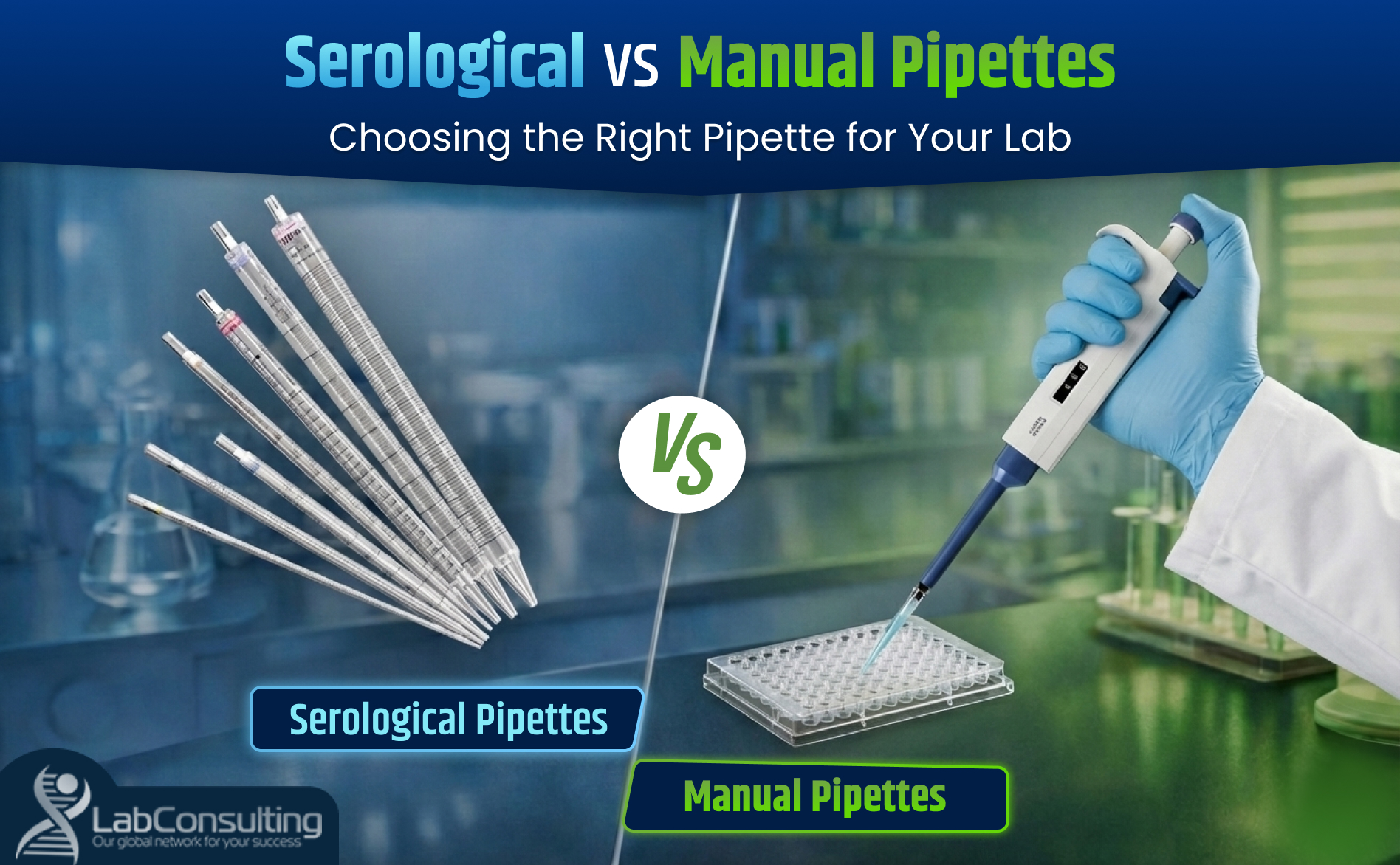
In every lab, the choice of pipetting tool plays a significant role in achieving accurate results and maintaining workflow efficiency. Whether you’re working in cell culture, molecular biology, or other research disciplines, choosing the right pipette can make a world of difference.
In this blog, we’ll compare serological pipettes and manual pipettes, examining their use in cell culture and molecular research, including tasks like PCR processes, protein assays, and immunology. We’ll highlight their key features, advantages, and ideal applications, so you can make an informed decision for your laboratory’s needs.
What Are Serological Pipettes?
Serological pipettes are designed for transferring larger volumes of liquids in laboratory settings. Typically ranging from 1 mL to 50 mL, these pipettes are widely used in cell culture procedures, media preparation, buffer solution mixing, and other applications that require handling larger liquid volumes.
- Volume Range: 1 mL to 50 mL
- Common Uses: Cell culture (serum transfer), large-volume liquid transfers, and media preparation for microbiology, immunology, and protein biology.
Advantages of Serological Pipettes:
- Speed: Excellent for transferring larger volumes of liquids quickly, making them ideal for repetitive tasks like cell culture media preparation.
- Ergonomics: When paired with pipette controllers, serological pipettes reduce hand and wrist strain, making them more comfortable for long sessions.
What Is Manual Pipetting?
Manual pipetting, typically done using micropipettes, is essential for precise small-volume transfers. The volume range for manual pipettes usually spans from 0.1 µL to 1000 µL, making them crucial for tasks that require accuracy with smaller quantities of liquid, such as PCR and protein assays.
- Volume Range: 0.1 µL to 1000 µL
- Common Uses: PCR processes, protein assays, immunology, DNA sequencing, and other molecular biology and biochemical experiments that require precision.
Advantages of Manual Pipetting:
- Accuracy: Manual pipettes are unrivaled in their ability to handle small volumes with precision. They’re the go-to choice for tasks where accuracy is critical, such as PCR setup.
- Flexibility: Manual pipettes can be used with a wide range of liquids, making them adaptable for many laboratory tasks.
Serological Pipettes vs Manual Pipetting: A Head‑to‑Head Comparison
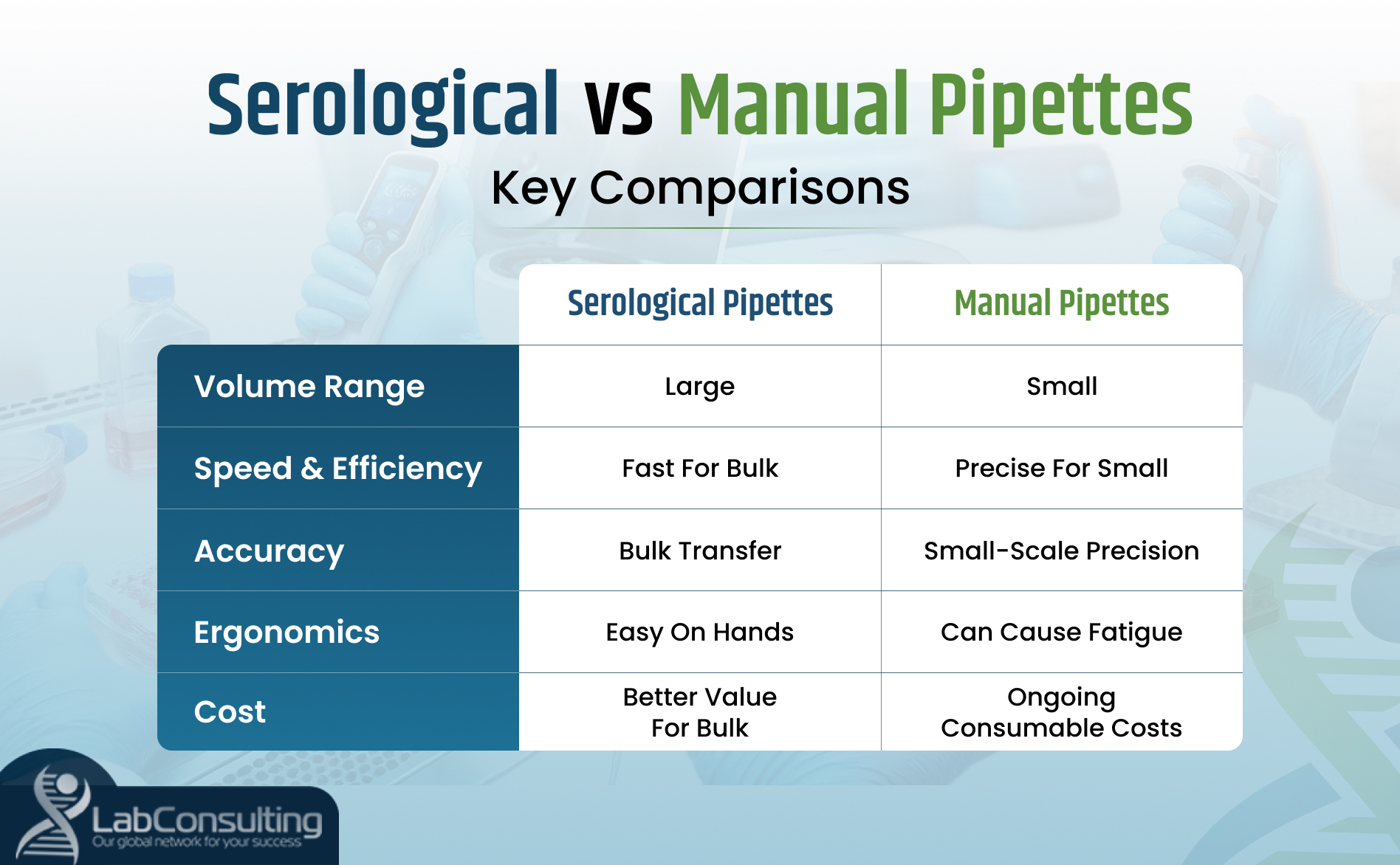
Now that we understand what each pipette is used for, let’s compare serological pipettes and manual pipettes based on several important factors:
1. Volume Range
Serological Pipettes: Best for larger volumes, typically from 1 mL to 50 mL, ideal for tasks like cell culture, media preparation, and buffer solution transfers.
Manual Pipetting: Best for small volumes, ranging from 0.1 µL to 1000 µL, perfect for precise transfers in molecular biology applications like PCR.
Winner:
Serological pipettes excel at handling large volumes, while manual pipettes are better for small, precise transfers.
2. Speed & Efficiency
Serological Pipettes: Serological pipettes are faster when handling large volumes of liquid, particularly when used with pipette controllers.
Manual Pipetting: Slower for transferring large volumes but highly efficient for small-scale, precise tasks like PCR setup or protein assays.
Winner:
Serological pipettes win for speed in handling larger volumes, while manual pipettes are best for small-scale, high-precision tasks.
3. Accuracy & Precision
Serological Pipettes: While serological pipettes provide good accuracy for larger volumes, precision may drop when working with smaller sample sizes.
Manual Pipetting: Manual pipetting provides unmatched precision for small-volume transfers, especially critical in molecular biology for tasks like PCR.
Winner:
Manual pipetting is better for small, accurate transfers, while serological pipettes are more effective for bulk liquid handling.
4. User Fatigue & Ergonomics
Serological Pipettes: When used with pipette controllers, serological pipettes reduce hand strain and are easier to use during repetitive tasks.
Manual Pipetting: Manual pipettes require more effort, and repetitive pipetting can lead to hand and wrist fatigue.
Winner:
Serological pipettes are better for ergonomics and reducing user fatigue, especially during repetitive tasks like media preparation and cell culture.
5. Cost & Consumables
Serological Pipettes: While the cost of pipette controllers may increase the initial investment, serological pipettes are cost-effective for handling larger volumes in high-throughput environments.
Manual Pipetting: Frequent use of manual pipettes can increase costs due to the continuous purchase of pipette tips, especially for small-volume tasks.
Winner:
Serological pipettes offer better value for bulk liquid handling, while manual pipettes may incur higher ongoing costs due to consumables.
When Should You Use Serological Pipettes?
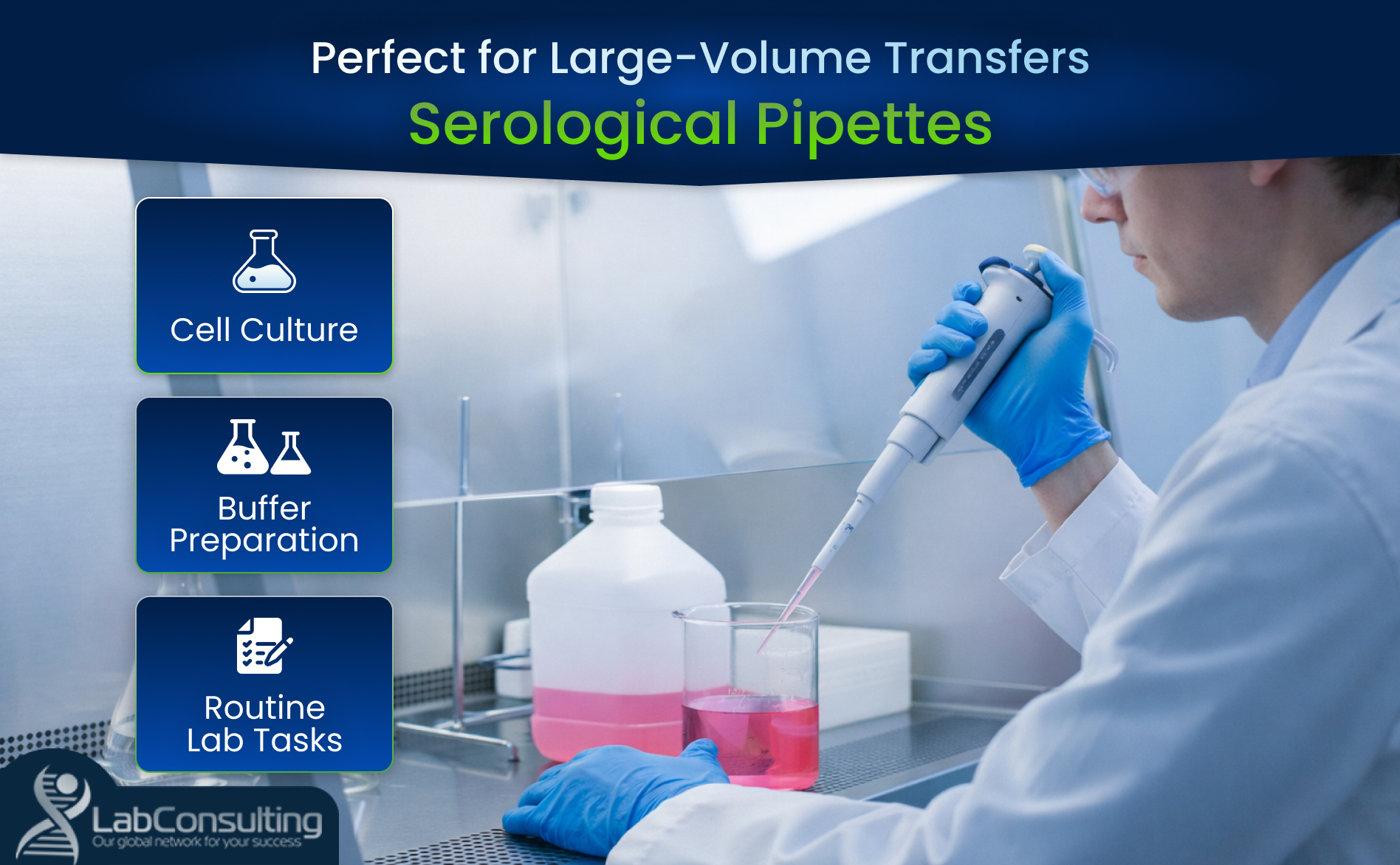
Serological pipettes are perfect for tasks where you need to handle larger volumes, such as:
- Cell culture: For transferring media and serum.
- Buffer solution preparation: When working with large volumes of liquid.
- Routine tasks: Repetitive, large-volume liquid transfers such as in microbiology and immunology.
If your lab is frequently engaged in cell culture or requires large-volume transfers, serological pipettes are the best choice.
When Should You Use Manual Pipetting?
Manual pipetting is ideal for tasks that require high precision in small-volume transfers, including:
- PCR or qPCR setup: For precise liquid transfers.
- Protein assays: For experiments that need tight control over small volumes.
- Immunology and molecular biology: For tasks requiring accuracy with microliter volumes.
If your work involves molecular assays, protein assays, or DNA sequencing, manual pipetting is essential for precision.
Best Practices for Using Both Pipettes
No matter which pipette you use, follow these best practices for better accuracy and efficiency:
- For Serological Pipettes:
- Always use pipette controllers for enhanced precision.
- Store pipettes properly to avoid contamination and damage.
- Always use pipette controllers for enhanced precision.
- For Manual Pipetting:
- Calibrate pipettes regularly to maintain accuracy.
- Pre-wet pipette tips to reduce error due to surface tension.
- Use filter tips to prevent contamination.
- Calibrate pipettes regularly to maintain accuracy.
Final Note: Which Is Better for Your Lab?
There is no universal answer, as the best choice depends on your lab’s needs:
- Serological pipettes are perfect for large-volume liquid transfers like cell culture and media preparation.
- Manual pipettes are best for precise, small-volume transfers needed in PCR, protein assays, and immunology.
Recommendation:
For most labs, a combination of both tools is ideal: serological pipettes for larger volumes and manual pipettes for precision in molecular biology and related fields
Looking for high-quality serological pipettes?
Explore our range of CappHarmony Serological Pipettes and LabQ Serological Pipettes.
Available in a variety of sizes to meet your lab’s needs!
Read more about CappHarmony Serological Pipettes
Read more about LabQ Serological Pipettes
FAQs
1. What are serological pipettes used for?
Serological pipettes are ideal for transferring larger volumes (1 mL to 50 mL) in cell culture, media preparation, and buffer solution tasks.
2. How do CappHarmony and LabQ serological pipettes compare?
CappHarmony pipettes are ergonomic and color-coded for easy volume identification, while LabQ pipettes provide consistent, accurate volume delivery, especially suited for high-throughput labs.
3. Why should I choose LabQ serological pipettes?
LabQ pipettes are reliable, precise, and perfect for cell biology and other high-volume laboratory applications. They offer excellent value with consistent performance.
4. Can I use serological pipettes with a pipette controller?
Yes, pipette controllers improve the speed, accuracy, and ergonomics of serological pipettes, making them ideal for tasks that involve large volumes.
5. Are serological pipettes reusable or disposable?
Most serological pipettes are disposable, but reusable options are available, requiring proper cleaning and maintenance.
6. Why should I choose serological pipettes over other types of pipettes?
Serological pipettes are better for handling larger volumes quickly and efficiently, making them perfect for tasks like cell culture and buffer solution preparation. They help reduce operator fatigue and improve productivity, especially in high-throughput workflows.
About The Author

Contact Us
RECENT POSTS
-

- February 6, 2026
How to Choose a CO₂ Incubator: Lab Features & Applications
A CO₂ incubator helps laboratories create a stable environment for growing living cells. It controls temperature, carbon dioxide levels, and...
Read More -

- December 31, 2025
Big Announcement: Meling’s -86° Ultra Low Temperature Freezer Earns ENERGY STAR Certification for Energy Efficiency
Ultra‑low temperature storage is essential in laboratories, research institutions, medical facilities, and biotech environments but historically comes with high energy...
Read More -

- December 23, 2025
How Innovation Labs Are Shaping Austria’s Scientific Landscape
Innovation labs in Austria are transforming the scientific landscape. In the past five years, their number has doubled, boosting research...
Read More


