



Filter Tips: How to Choose the Right Type for Molecular Biology and PCR Workflows
- December 23, 2025
- Last Updated: December 23, 2025
In molecular and cell biology labs, accuracy and contamination control are crucial for successful experiments. Filter tips, unlike regular pipette tips, have a built-in aerosol barrier that prevents sample material, enzymes, or nucleic acids from entering the pipette shaft, ensuring clean, reliable results. These tips are essential for workflows like PCR, qPCR, sequencing, and cloning, where contamination can compromise results.
Labs in Austria, Germany, and Switzerland increasingly rely on DNase/RNase-free, sterile, and low-retention filter tips for reproducible results. Choosing the right filter tip is crucial, as it reduces false positives, improves pipetting accuracy, and prevents disruptions in molecular workflows.
LabConsulting offers one of the largest in-stock selections of filter tips in the DACH region, featuring major brands like LabQ, Neptune, Capp/Ahn Expell, Sorenson, and Axygen/Corning, providing options that fit both application and budget.
This guide explains the different types of filter tips and helps you select the best one for your PCR and molecular biology needs.
What Are Filter Tips?

Filter tips are specialized pipette tips designed with an internal aerosol barrier that stops liquids, vapors, and microscopic particles from entering the pipette shaft. This barrier is made from hydrophobic material, allowing users to pipette sensitive samples without risking cross-contamination or equipment damage.
How Filter Pipette Tips Function in the Lab
When pipetting small volumes especially DNA, RNA, proteins, enzymes, or cell culture samples aerosols can easily travel upward. Filter pipette tips block this movement, keeping both the pipette and the sample clean. This is why they are preferred in workflows that require high precision, including PCR, qPCR, sequencing, and molecular diagnostics.
Situations Where Filter Tips Are Required
Certain laboratory environments demand strict contamination control. Filter tips are essential when working with:
- RNA or DNA samples that are easily degraded
- PCR or qPCR reactions requiring ultra-clean conditions
- Cell culture materials that must remain sterile
- Viscous or volatile liquids that tend to aerosolize
- Hazardous or infectious samples handled under safety protocols
These applications often rely on DNase/RNase-free filter tips, sterile filter tips, or low-retention designs depending on workflow requirements.
Key Differences Between Standard and Filtered Tips
Standard pipette tips support everyday pipetting, but they do not provide barrier protection. Filter tips add:
- An aerosol-blocking membrane
- Better protection for pipettes and internal components
- More reliable results for low-volume assays
- Higher safety when handling sensitive or regulated materials
This makes filtered versions the preferred choice in molecular biology labs across DACH, where reproducibility and cleanliness are critical.
Types of Filter Tips and When to Use Them
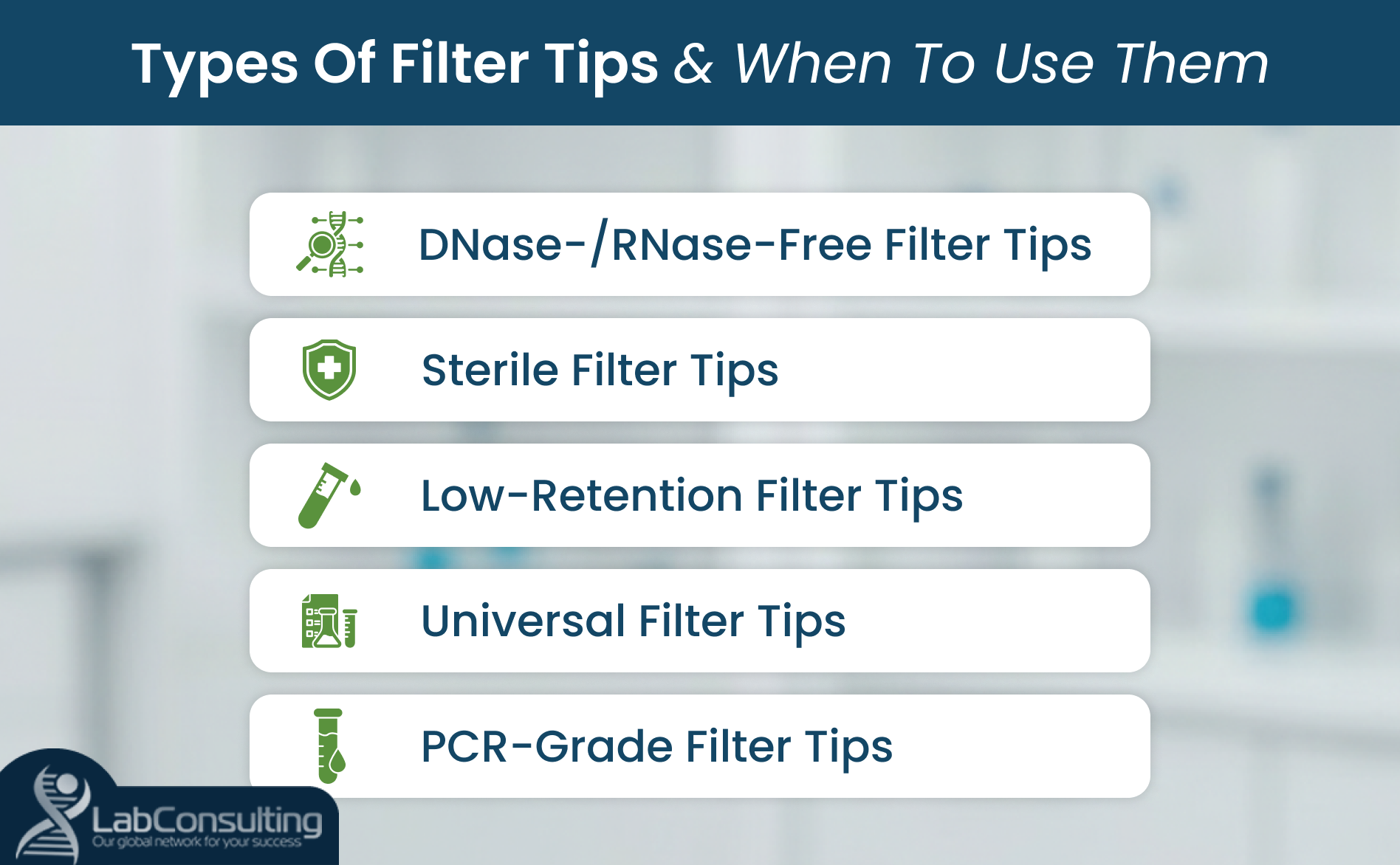
Different laboratory applications require different levels of purity, sterility, and liquid-handling performance. Below are the main types of filter tips used in molecular biology and cell biology workflows, along with when each type is recommended.
DNase-/RNase-Free Filter Tips
These tips undergo a certified manufacturing process to ensure they contain no detectable DNase or RNase activity. They are essential when working with:
- RNA extraction
- Reverse transcription
- PCR and qPCR workflows
- Sequencing and cloning
Any trace nuclease activity can degrade samples and compromise assays, making DNase/RNase-free filter tips the standard in sensitive molecular techniques.
Sterile Filter Tips
Sterile options are produced under cleanroom conditions and packaged to maintain sterility until use. They are chosen for:
- Cell culture
- Microbiology applications
- Handling primary cells
- Any workflow requiring aseptic technique
These sterile filter tips protect samples from microbial contamination and are preferred by labs with strict QC requirements.
Low-Retention Filter Tips
Low-retention versions feature a hydrophobic surface that ensures maximum sample recovery, especially when pipetting:
- Enzymes and proteins
- Detergents and viscous reagents
- DNA polymerases and master mixes
- Lipid-based solutions
They reduce sample loss and improve reproducibility in assays where every microliter counts.
Universal Filter Tips
These tips are engineered to fit a wide range of pipettes, including:
- Eppendorf
- Gilson
- Thermo
- Sartorius
- Rainin (depending on model)
Universal filter pipette tips help labs streamline ordering and reduce compatibility problems. They are also a cost-effective solution for multi-user environments.
PCR-Grade Filter Tips
PCR-grade options combine nuclease-free production with enhanced cleanliness, making them suitable for:
- High-sensitivity qPCR
- Low-copy-number DNA detection
- Diagnostic or quality-controlled workflows
Labs choose PCR filter tips when precision and sample integrity are non-negotiable.
Choosing the Right Filter Tip for Molecular Biology Workflows

Selecting the correct filter tips depends on the type of workflow, sample sensitivity, and the equipment used. Each application demands a different level of purity and performance. This section outlines practical selection criteria for common molecular biology tasks.
Choosing Tips for PCR and qPCR
PCR-based methods are extremely sensitive, which means even a small amount of contamination can invalidate results. For these workflows, labs typically select:
- DNase/RNase-free filter pipette tips to protect nucleic acid samples
- PCR-grade filter tips for high assay precision
- Low-retention options when master mixes or polymerases must be pipetted accurately
These combinations help maintain clean amplification conditions and ensure consistent Ct values.
Choosing Tips for Cell Culture Applications
Cell culture work requires strict sterility. The recommended options include:
- Sterile filter tips to prevent bacterial or fungal contamination
- Universal filter pipette tips compatible with single-channel and multichannel pipettes
- Formats suitable for routine media transfers or plating steps
These selections support aseptic technique and reduce risks that could compromise cell viability.
Choosing Tips for General Molecular Biology Tasks
For standard workflows such as buffer preparation, reagent dilution, or routine pipetting, labs often prefer:
- Universal filter tips for flexibility
- Standard low-retention options when precise recovery is beneficial
- DNase/RNase-free tips when handling nucleic acid samples intermittently
These provide reliable performance without unnecessary complexity or cost.
Choosing Tips for High-Throughput or Multi-User Labs
Labs with frequent or large-volume pipetting benefit from:
- Bulk packaging for economical usage
- Racked systems that support fast loading
- Universal tip designs to avoid compatibility issues across different pipette types
This ensures consistent supply and efficient workflow management.
Choosing Tips for Cost-Sensitive Laboratories
When budgets matter, labs still need reliable quality without sacrificing performance. Good solutions include:
- Own-label options such as LabQ filter tips
- Capp/Ahn Expell for balanced pricing
- Universal designs that work across various pipettes
These provide dependable performance while controlling consumable costs.
Buying Guide: How Labs in Austria and Germany Should Select Filter Tips
When it comes to purchasing filter tips, laboratories in Austria, Germany, and across the DACH region face a wide array of options. The right choice depends on several factors, including workflow requirements, sample sensitivity, equipment compatibility, and budget. This guide will help you navigate the decision-making process to select the best filter tips for your lab’s needs.
Checklist for Choosing the Right Tip
To make the right choice for your laboratory, consider the following factors:
- Tip Volume: Choose based on your typical pipetting volumes (e.g., 10µL, 200µL, 1000µL).
- Sterility Requirements: If you are working with cell culture or microbiology, sterile filter tips are necessary.
- Filter Type: Decide if DNase/RNase-free, low-retention, or universal tips are needed for your specific application.
- Compatibility with Pipettes: Ensure the tips fit your brand of pipette. If you use a variety of pipettes, universal filter pipette tips are an ideal option.
- Application Type: Consider the specific assays or workflows, like PCR, qPCR, or cell culture, and select tips accordingly.
Rack vs. Bulk Packaging
Labs have different needs when it comes to how filter tips are packaged:
- Bulk packaging is more economical for high-volume labs. It reduces costs but may result in more waste if not managed properly.
- Racked tips are more convenient, especially for multi-user labs, as they reduce the time spent on refilling pipette tip racks and help maintain cleanliness in the lab environment.
Choosing the right packaging depends on the lab’s workflow and storage capacity.
Brand Selection Based on Lab Needs
Choosing a filter tip brand comes down to specific requirements:
- High-precision labs might prefer Axygen/Corning filter tips or Neptune filter tips for their stringent quality controls.
- General-purpose labs can opt for LabQ filter tips, which offer a cost-effective solution without compromising on performance.
- PCR-focused labs will benefit from DNase/RNase-free filter tips and PCR-grade options, ensuring the purity of their samples during sensitive amplification processes.
- For labs working in cell culture, sterile filter tips are essential to avoid contamination.
Why Stock Availability Matters
Having a reliable supplier with fast delivery is essential. LabConsulting offers the largest selection of filter tips in Austria and the DACH region, ensuring that:
- Labs don’t experience downtime waiting for products
- Bulk orders are processed quickly
- The correct product is always in stock, even for specialized or low-volume filter tips
LabConsulting’s inventory of five major filter tip brands ensures there is always an option available for every need, from budget-friendly to high-performance solutions.
Why LabConsulting is a Reliable Supplier
LabConsulting is the go-to supplier for filter tips in Austria and the DACH region. With our expansive inventory, we support:
- On-demand availability of LabQ filter tips, Neptune, Capp Expell, and Axygen/Corning
- Flexible purchasing options, whether for individual labs or large organizations
- Pipette service and maintenance to ensure the performance of both pipettes and filter tips
Our commitment to quality and service makes us the preferred choice for labs requiring precision and reliability.
Related Consumables: You Need Pipettes to Use Filter Tips
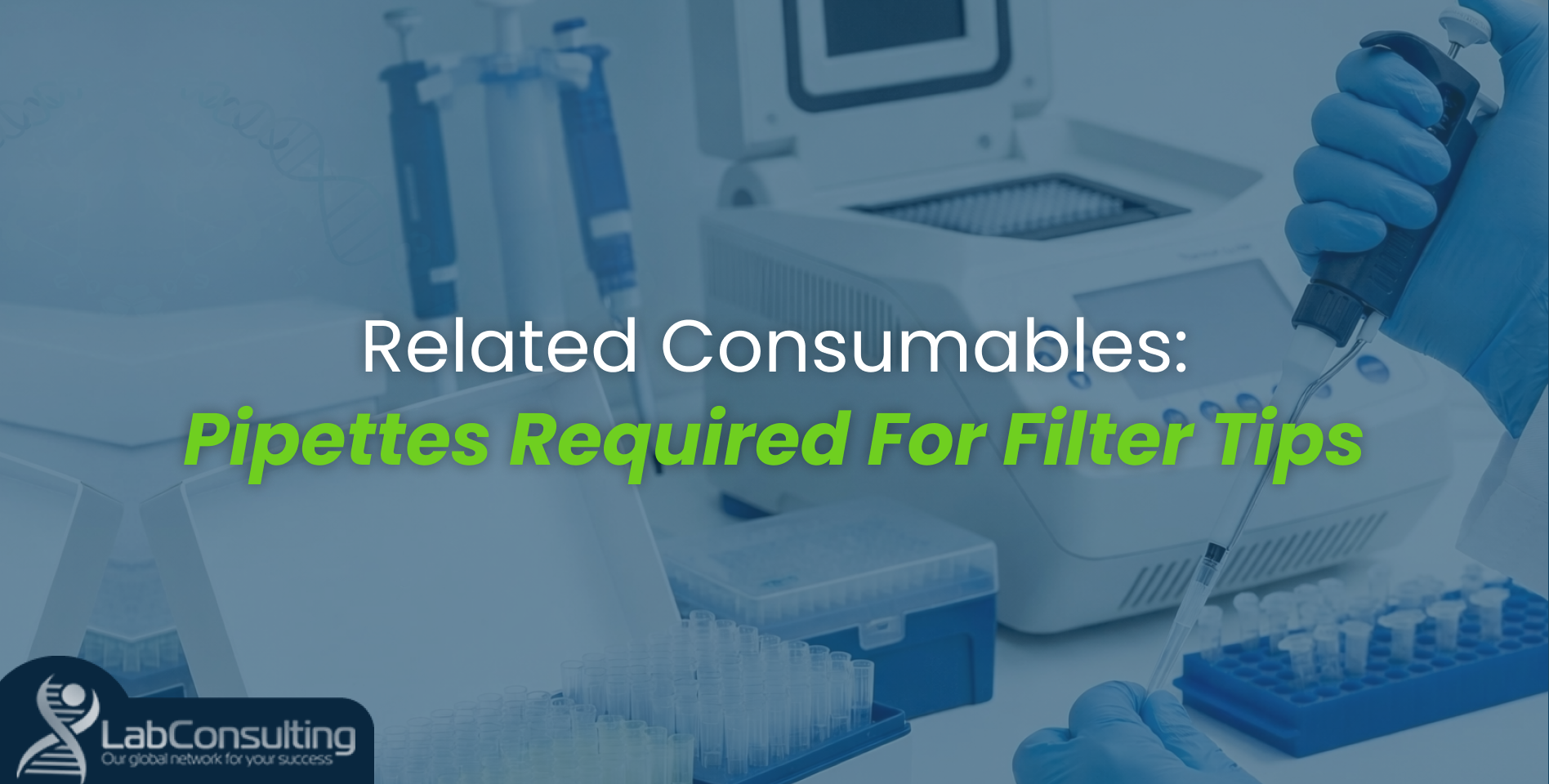
While filter tips are essential for ensuring contamination-free pipetting, it’s equally important to remember that high-quality pipettes are the backbone of accurate and reliable liquid handling. Without a well-calibrated pipette, even the best filter pipette tips won’t perform to their full potential. This section highlights the critical relationship between pipettes and filter tips and why proper pipette maintenance and calibration are necessary for optimal performance.
The Role of Pipettes in Accurate Filter Tip Usage
Pipettes are precision instruments that measure and transfer liquids accurately. However, if the pipette is not functioning properly, even the best DNase/RNase-free filter tips or sterile filter tips can lead to inaccurate results. For instance:
- A poorly calibrated pipette can cause volume inaccuracies, affecting experimental reproducibility.
- Worn-out pipette seals can allow air leaks, reducing the effectiveness of the aerosol barrier in filter tips.
- Contaminated pipettes can negate the benefits of using low-retention filter tips or other specialized designs.
Ensuring that pipettes are in peak condition is essential for achieving the precise liquid transfer that filter tips are designed to support.
Why You Need Regular Pipette Service
To maximize the lifespan and accuracy of both your filter tips and pipettes, regular maintenance is necessary. LabConsulting offers comprehensive pipette services that include:
- Calibration to ensure accuracy and compliance with standards
- Preventive maintenance to avoid potential malfunctions
- Repairs when pipettes become worn out or damaged
Proper pipette service ensures that all pipetting systems, when paired with filter pipette tips, continue to function optimally for molecular biology, PCR, and qPCR applications.
How Pipette Calibration Affects Filter Tip Performance
Accurate pipette calibration impacts every aspect of the lab workflow, particularly in precise applications like qPCR and cell culture:
- Well-calibrated pipettes ensure that the correct sample volumes are consistently measured, preventing the overuse or underuse of reagents.
- Proper pipette function maintains the seal needed for aerosol protection, preventing leakage through the filter tip.
For labs in Austria and the DACH region, having both reliable filter tips and well-calibrated pipettes is non-negotiable for high-quality molecular research.
Conclusion: Choosing Filter Tips That Protect Your Results and Your Lab Equipment
When it comes to molecular biology and cell biology workflows, the filter tips you choose play a critical role in protecting both your samples and your equipment. From DNase/RNase-free tips to sterile, low-retention, and universal filter pipette tips, selecting the right option for your lab ensures not only the accuracy and reproducibility of your experiments but also the longevity of your pipettes.
Labs across Austria, Germany, and the DACH region trust LabConsulting for their consumables, from filter tips to pipette services. With our wide selection of high-quality filter pipette tips, we meet the needs of diverse workflows, ensuring your research stays reliable and your results remain uncontaminated.
LabConsulting stands out by offering:
- In-stock availability of multiple brands like LabQ, Neptune, Capp Expell, Axygen/Corning, and Sorenson
- Fast, efficient delivery tailored to your lab’s demands
- Expertise in pipette service, ensuring your equipment stays in top condition for consistent performance
By selecting the right filter tips and ensuring your pipettes are properly maintained, you are investing in more than just consumables you’re investing in the success and precision of your laboratory.
About The Author

Contact Us
RECENT POSTS
-
- February 6, 2026
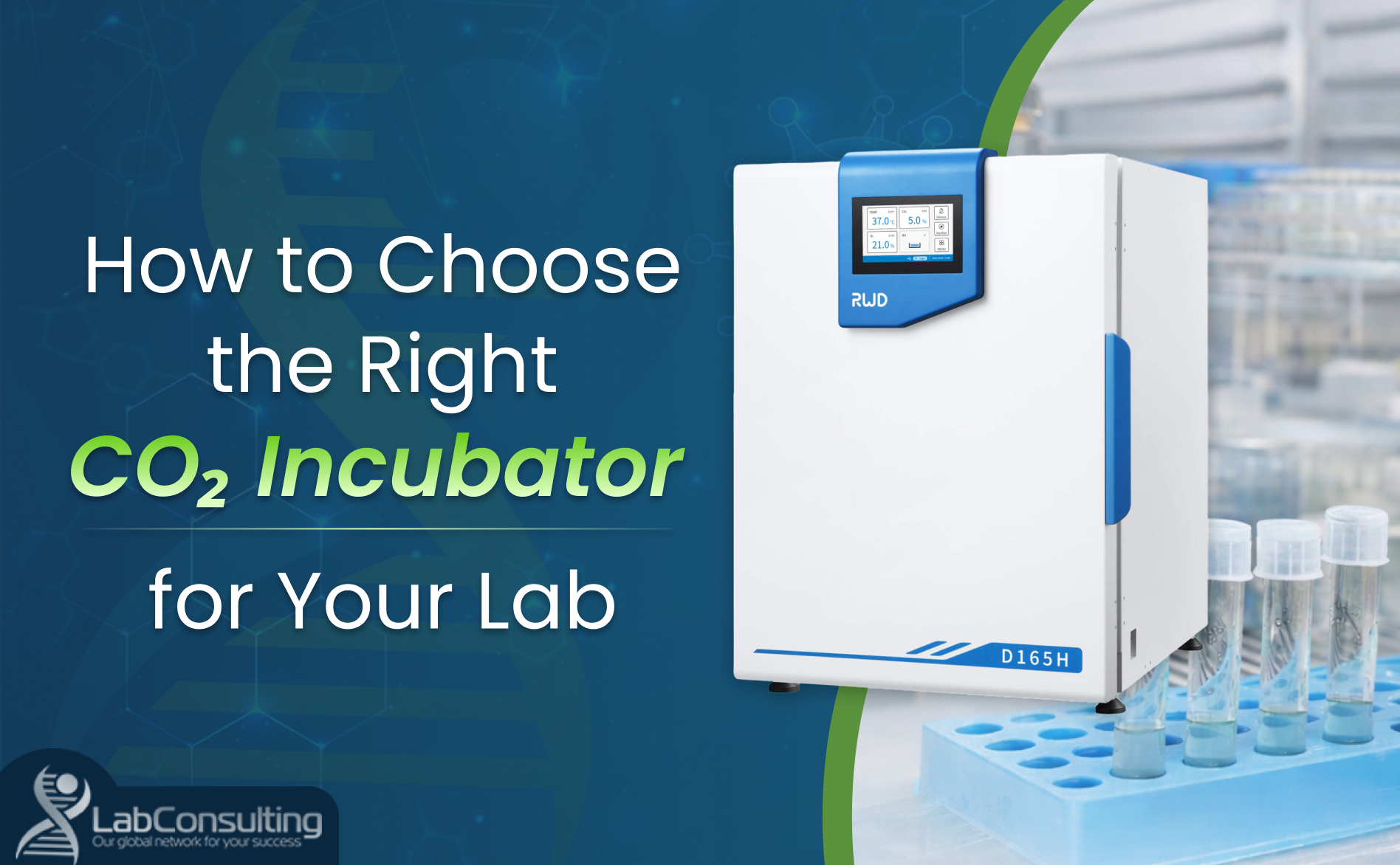
How to Choose a CO₂ Incubator: Lab Features & Applications
A CO₂ incubator helps laboratories create a stable environment for growing living cells. It controls temperature, carbon dioxide levels, and...
Read More -
- January 13, 2026
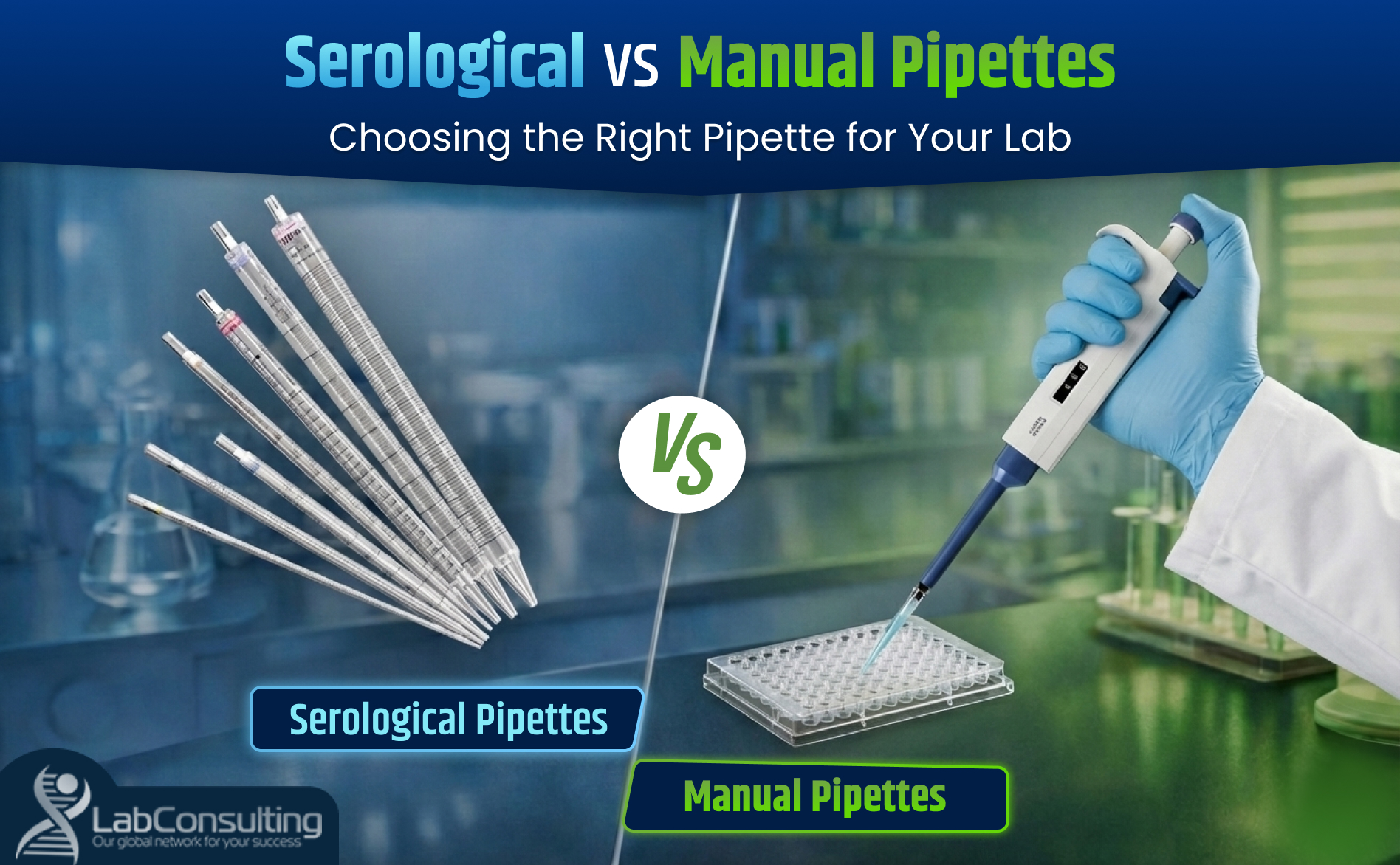
Serological vs Manual Pipettes: Finding the Best Fit for Cell Culture and Molecular Research
In every lab, the choice of pipetting tool plays a significant role in achieving accurate results and maintaining workflow efficiency....
Read More -
- December 31, 2025
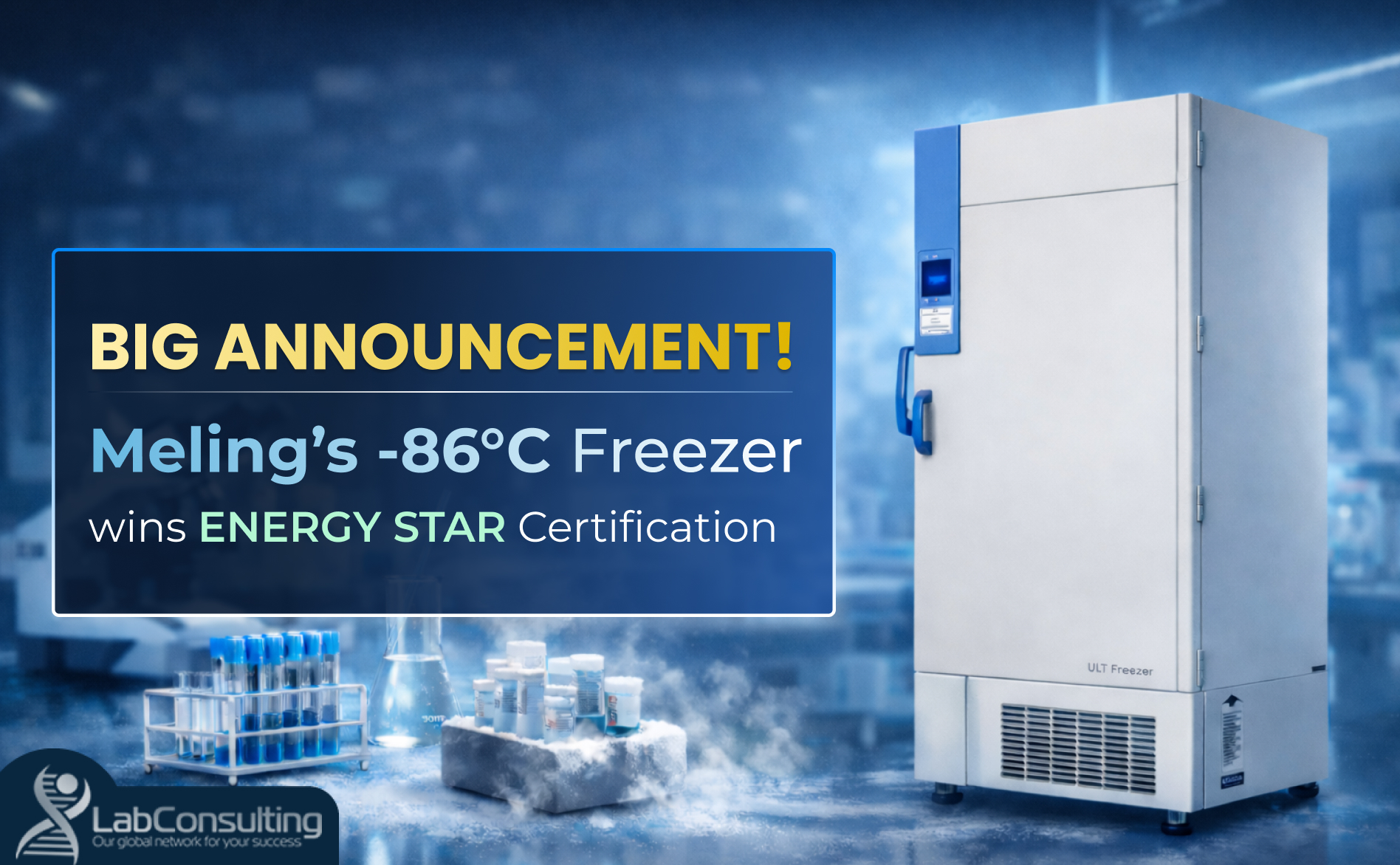
Big Announcement: Meling’s -86° Ultra Low Temperature Freezer Earns ENERGY STAR Certification for Energy Efficiency
Ultra‑low temperature storage is essential in laboratories, research institutions, medical facilities, and biotech environments but historically comes with high energy...
Read More


